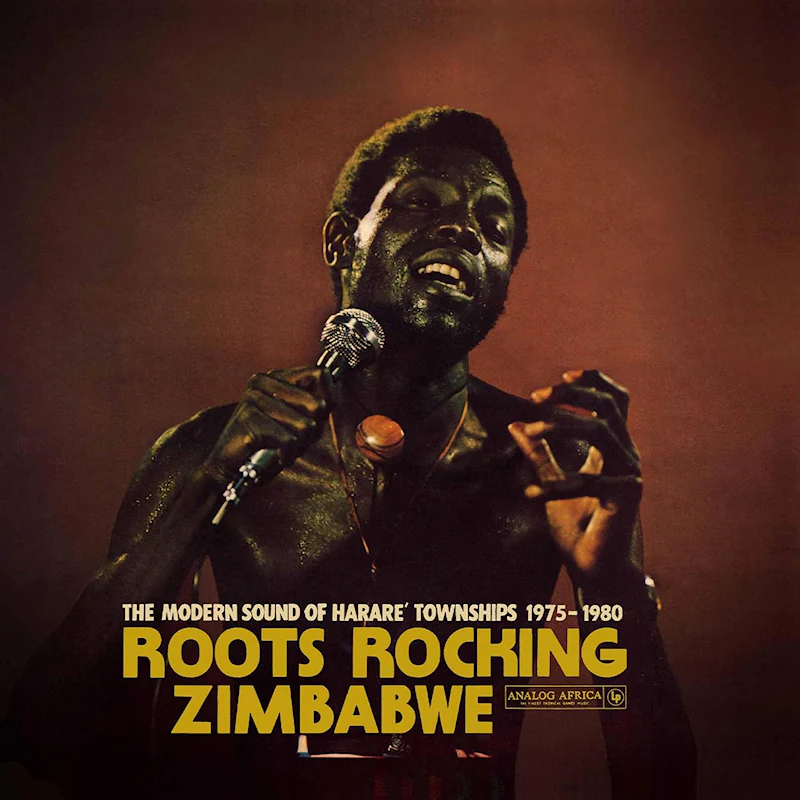
Various - Roots Rocking Zimbabwe (The Modern Sound of Harare Townships 1975-1980) (LP)
2xLP/Gatefold LP with 20-pages booklet
In 1972 black people rarely featured in the country’s white-owned official newspapers, unless, perhaps, they were a dead “terrorist”. However, Dr Footswitch’s performance prompted The Rhodesia Herald to print the picture of their guitar player, Manu Kambani, on the front page along with the screaming sentence “Jimi Hendrix is dead but Manu is alive”. With his ability to mimic the mesmerising antics of Jimi Hendrix Manu had impressed everybody and the editor of the paper couldn’t resist printing the story. Heavy criticism from conservative whites followed, accusing the Herald of “lowering the standards.” But the coverage turned Manu into an emblematic figure in Harare, one of Salisbury’s oldest townships, and would influence many youngsters to form their own musical groups. Those bands began fusing Rock music, Congolese Rumba, South African Mbaqanga, soul and traditional beats into an underground music movement that would shape the future of Zimbabwean sound and challenge the colonial establishment.
All the commotion started drawing interest from South Africa’s industry players and a good number of Rhodesian bands – including The Great Sounds, MD Rhythm Success, Afrique 73, The Hitch-Hikers, The Impossibles and the O.K Success – had managed to get one-off recording deals with Gallo Record on the strength of their live performances. But for some reason the South African giant didn’t totally capitalise on the momentum and that vacuum was filled in 1974 by the Teal Record Company who had decided to beef up their Rhodesian subsidiary. Crispen Matema, a prolific drummer with a love for traditional music, was hired to oversee the program.
Driving across the country in his Peugeot 504, Matema scouted undiscovered talent, organised live music contests, and booked a small studio in downtown Salisbury. Within a year, he had recorded fantastic bands such The Baked Beans, Blacks Unlimited, New Tutenkhamen, The Acid Band, Echoes Ltd, Gypsy Caravan and many others. To release this flood of music, Teal launched several new imprints, including Afro Soul, Afro Pop, and Shungu.
Not to be outdone, Gallo Records finally sent the legendary sax jive producer West Nkosi to Rhodesia to scout for emerging talent. A chance recommendation led him to the Jamaica Inn Hotel, where he encountered The Green Arrows led by the carismatic Zexie Manatsa. By Christmas 1974, their single ‘Chipo Chiroorwa’ had sold over 25,000 copies, making them the first Rhodesian band to earn a gold disc. In November 1975 Nkosi arranged for another session for The Green Arrows at the Film Project Studios to record the fuzz-drenched ‘Towering Inferno’, a tribute to Paul Newman and the crystalline guitar instrumental ‘No Delay’, a homage to Steve McQueen.
In 1976 the liberation war is raging when Teal began immortalising Thomas Mapfumo on 1/4inch tape. Thomas had just joined forces with the Black Unlimited and The Acid Band and had started modernising traditional songs to great effect. That revolutionary style deeply rooted in Shona culture known as Chimurenga unified all generations under the banner of the liberation struggle. Zexie Manatsa and Thomas Mapfumo massive popularity attracted the attention of the PATU (Police Anti-Terrorist Unit) who didn‘t like the massive crowds these artists were attracting. As a result Both Manatsa and Mapfumo were arrested and imprisoned.
Despite the arrests and the increasing scrutiny from the Rhodesian authorities, the music refused to be silenced. If anything, the repression only strengthened the resolve of Zimbabwean artists such as the enigmatic Tineyi Chikupo, who continued to compose songs that carried the hopes and struggles of the people. By the time Zimbabwe gained independence in 1980, the musicians who had risked everything to give their people a voice emerged as national heroes.
The 25 songs presented in this project showcase the birth of the modern music industry in Zimbabwe and the explosion of creativity bands of the 1970s and 80s delivered is endlessly rewarding. It was a time of wild experimentation before established genres had crystallised. Rock, rumba, soul and traditional grooves all collide beautifully in this collection, which also includes never-before-released tracks by Thomas Mapfumo, Oliver Mtukudzi and many other Zimbabwean artists!
Original: $49.30
-65%$49.30
$17.25Various - Roots Rocking Zimbabwe (The Modern Sound of Harare Townships 1975-1980) (LP)
2xLP/Gatefold LP with 20-pages booklet
In 1972 black people rarely featured in the country’s white-owned official newspapers, unless, perhaps, they were a dead “terrorist”. However, Dr Footswitch’s performance prompted The Rhodesia Herald to print the picture of their guitar player, Manu Kambani, on the front page along with the screaming sentence “Jimi Hendrix is dead but Manu is alive”. With his ability to mimic the mesmerising antics of Jimi Hendrix Manu had impressed everybody and the editor of the paper couldn’t resist printing the story. Heavy criticism from conservative whites followed, accusing the Herald of “lowering the standards.” But the coverage turned Manu into an emblematic figure in Harare, one of Salisbury’s oldest townships, and would influence many youngsters to form their own musical groups. Those bands began fusing Rock music, Congolese Rumba, South African Mbaqanga, soul and traditional beats into an underground music movement that would shape the future of Zimbabwean sound and challenge the colonial establishment.
All the commotion started drawing interest from South Africa’s industry players and a good number of Rhodesian bands – including The Great Sounds, MD Rhythm Success, Afrique 73, The Hitch-Hikers, The Impossibles and the O.K Success – had managed to get one-off recording deals with Gallo Record on the strength of their live performances. But for some reason the South African giant didn’t totally capitalise on the momentum and that vacuum was filled in 1974 by the Teal Record Company who had decided to beef up their Rhodesian subsidiary. Crispen Matema, a prolific drummer with a love for traditional music, was hired to oversee the program.
Driving across the country in his Peugeot 504, Matema scouted undiscovered talent, organised live music contests, and booked a small studio in downtown Salisbury. Within a year, he had recorded fantastic bands such The Baked Beans, Blacks Unlimited, New Tutenkhamen, The Acid Band, Echoes Ltd, Gypsy Caravan and many others. To release this flood of music, Teal launched several new imprints, including Afro Soul, Afro Pop, and Shungu.
Not to be outdone, Gallo Records finally sent the legendary sax jive producer West Nkosi to Rhodesia to scout for emerging talent. A chance recommendation led him to the Jamaica Inn Hotel, where he encountered The Green Arrows led by the carismatic Zexie Manatsa. By Christmas 1974, their single ‘Chipo Chiroorwa’ had sold over 25,000 copies, making them the first Rhodesian band to earn a gold disc. In November 1975 Nkosi arranged for another session for The Green Arrows at the Film Project Studios to record the fuzz-drenched ‘Towering Inferno’, a tribute to Paul Newman and the crystalline guitar instrumental ‘No Delay’, a homage to Steve McQueen.
In 1976 the liberation war is raging when Teal began immortalising Thomas Mapfumo on 1/4inch tape. Thomas had just joined forces with the Black Unlimited and The Acid Band and had started modernising traditional songs to great effect. That revolutionary style deeply rooted in Shona culture known as Chimurenga unified all generations under the banner of the liberation struggle. Zexie Manatsa and Thomas Mapfumo massive popularity attracted the attention of the PATU (Police Anti-Terrorist Unit) who didn‘t like the massive crowds these artists were attracting. As a result Both Manatsa and Mapfumo were arrested and imprisoned.
Despite the arrests and the increasing scrutiny from the Rhodesian authorities, the music refused to be silenced. If anything, the repression only strengthened the resolve of Zimbabwean artists such as the enigmatic Tineyi Chikupo, who continued to compose songs that carried the hopes and struggles of the people. By the time Zimbabwe gained independence in 1980, the musicians who had risked everything to give their people a voice emerged as national heroes.
The 25 songs presented in this project showcase the birth of the modern music industry in Zimbabwe and the explosion of creativity bands of the 1970s and 80s delivered is endlessly rewarding. It was a time of wild experimentation before established genres had crystallised. Rock, rumba, soul and traditional grooves all collide beautifully in this collection, which also includes never-before-released tracks by Thomas Mapfumo, Oliver Mtukudzi and many other Zimbabwean artists!
Product Information
Product Information
Shipping & Returns
Shipping & Returns
Description
2xLP/Gatefold LP with 20-pages booklet
In 1972 black people rarely featured in the country’s white-owned official newspapers, unless, perhaps, they were a dead “terrorist”. However, Dr Footswitch’s performance prompted The Rhodesia Herald to print the picture of their guitar player, Manu Kambani, on the front page along with the screaming sentence “Jimi Hendrix is dead but Manu is alive”. With his ability to mimic the mesmerising antics of Jimi Hendrix Manu had impressed everybody and the editor of the paper couldn’t resist printing the story. Heavy criticism from conservative whites followed, accusing the Herald of “lowering the standards.” But the coverage turned Manu into an emblematic figure in Harare, one of Salisbury’s oldest townships, and would influence many youngsters to form their own musical groups. Those bands began fusing Rock music, Congolese Rumba, South African Mbaqanga, soul and traditional beats into an underground music movement that would shape the future of Zimbabwean sound and challenge the colonial establishment.
All the commotion started drawing interest from South Africa’s industry players and a good number of Rhodesian bands – including The Great Sounds, MD Rhythm Success, Afrique 73, The Hitch-Hikers, The Impossibles and the O.K Success – had managed to get one-off recording deals with Gallo Record on the strength of their live performances. But for some reason the South African giant didn’t totally capitalise on the momentum and that vacuum was filled in 1974 by the Teal Record Company who had decided to beef up their Rhodesian subsidiary. Crispen Matema, a prolific drummer with a love for traditional music, was hired to oversee the program.
Driving across the country in his Peugeot 504, Matema scouted undiscovered talent, organised live music contests, and booked a small studio in downtown Salisbury. Within a year, he had recorded fantastic bands such The Baked Beans, Blacks Unlimited, New Tutenkhamen, The Acid Band, Echoes Ltd, Gypsy Caravan and many others. To release this flood of music, Teal launched several new imprints, including Afro Soul, Afro Pop, and Shungu.
Not to be outdone, Gallo Records finally sent the legendary sax jive producer West Nkosi to Rhodesia to scout for emerging talent. A chance recommendation led him to the Jamaica Inn Hotel, where he encountered The Green Arrows led by the carismatic Zexie Manatsa. By Christmas 1974, their single ‘Chipo Chiroorwa’ had sold over 25,000 copies, making them the first Rhodesian band to earn a gold disc. In November 1975 Nkosi arranged for another session for The Green Arrows at the Film Project Studios to record the fuzz-drenched ‘Towering Inferno’, a tribute to Paul Newman and the crystalline guitar instrumental ‘No Delay’, a homage to Steve McQueen.
In 1976 the liberation war is raging when Teal began immortalising Thomas Mapfumo on 1/4inch tape. Thomas had just joined forces with the Black Unlimited and The Acid Band and had started modernising traditional songs to great effect. That revolutionary style deeply rooted in Shona culture known as Chimurenga unified all generations under the banner of the liberation struggle. Zexie Manatsa and Thomas Mapfumo massive popularity attracted the attention of the PATU (Police Anti-Terrorist Unit) who didn‘t like the massive crowds these artists were attracting. As a result Both Manatsa and Mapfumo were arrested and imprisoned.
Despite the arrests and the increasing scrutiny from the Rhodesian authorities, the music refused to be silenced. If anything, the repression only strengthened the resolve of Zimbabwean artists such as the enigmatic Tineyi Chikupo, who continued to compose songs that carried the hopes and struggles of the people. By the time Zimbabwe gained independence in 1980, the musicians who had risked everything to give their people a voice emerged as national heroes.
The 25 songs presented in this project showcase the birth of the modern music industry in Zimbabwe and the explosion of creativity bands of the 1970s and 80s delivered is endlessly rewarding. It was a time of wild experimentation before established genres had crystallised. Rock, rumba, soul and traditional grooves all collide beautifully in this collection, which also includes never-before-released tracks by Thomas Mapfumo, Oliver Mtukudzi and many other Zimbabwean artists!