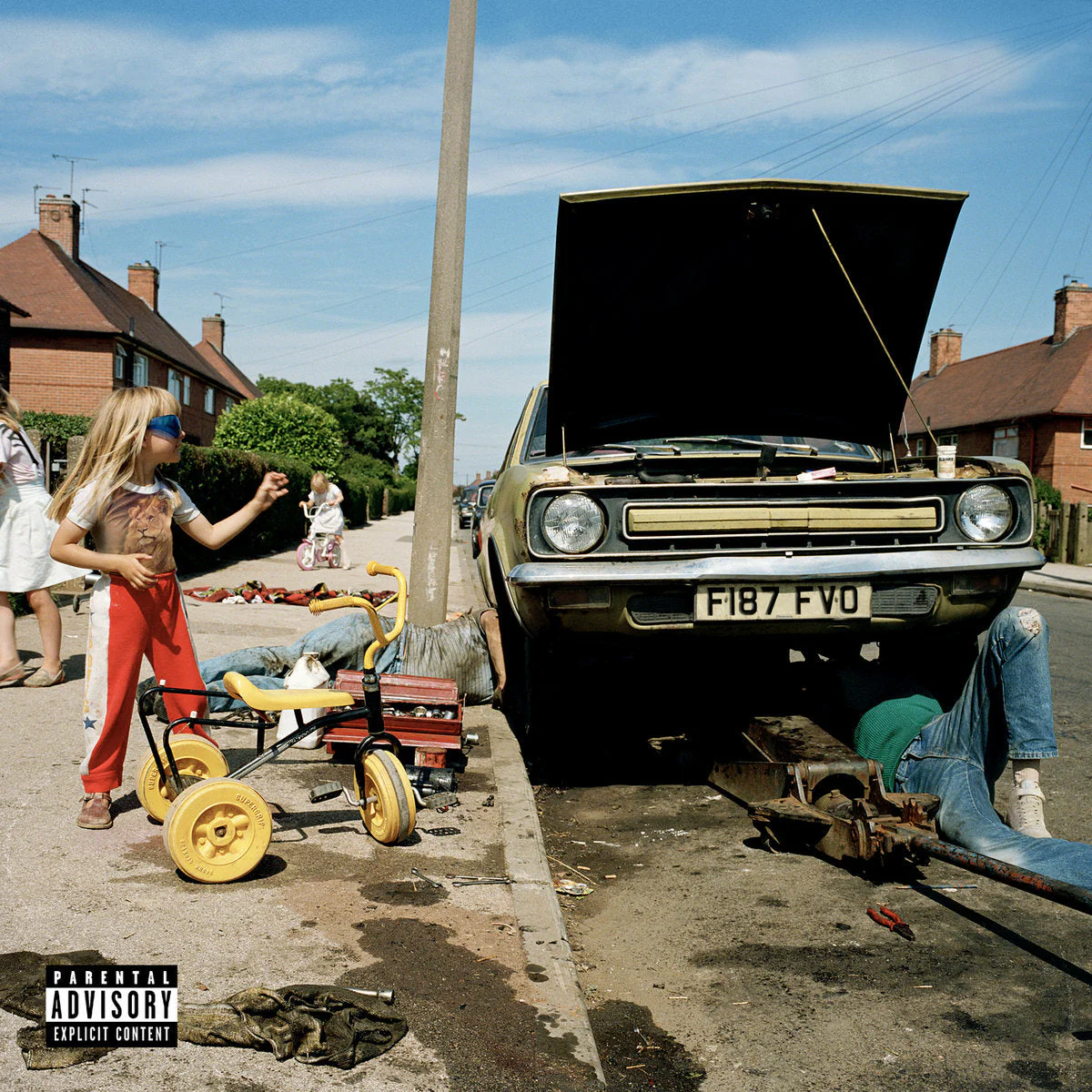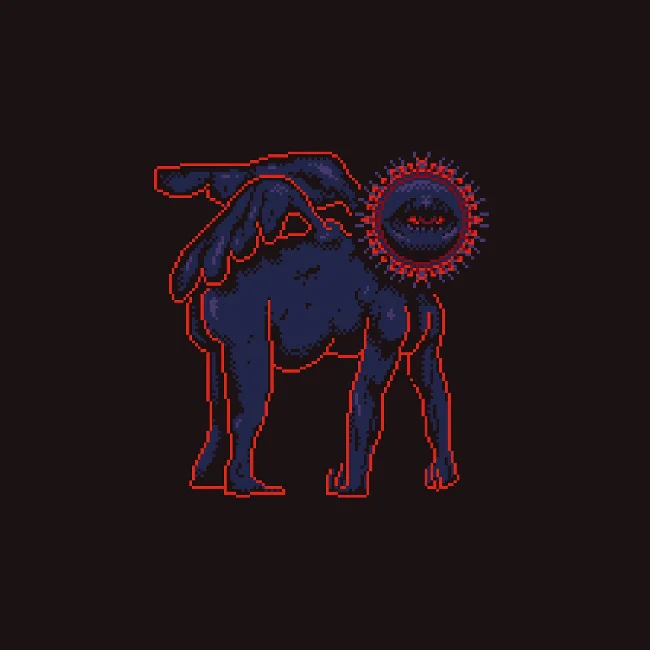
Sanam - Sametou Sawtan (LP)
The title of the second SANAM album is as alive with possibility as the Lebanese band’s music. Sametou Sawtan translates from the Arabic to ‘I Heard A Voice’. Spooky or spiritual, however one reads the phrase, it speaks to the ability of sound and language to cause pause, steal attention, and open us to the moment. Likewise, the music of SANAM blurs tender frenzies and fire-scorched ballads, collapsing free-flowing rock and jazz frameworks into deeply rooted Arabic tradition. To hear them in full flight is to be held in the present and reorientated towards an open horizon.
Work on Sametou Sawtan began in early 2024. Initial ideas formed at Tunefork Studios in Beirut were fleshed out in April during a residency at Beit Faris, a medieval house in the coastal city of Byblos. The sextet: Sandy Chamoun (vocals), Antonio Hajj (bass), Farah Kaddour (buzuq), Anthony Sahyoun (guitar, synth), Pascal Semerdjian (drums), and Marwan Tohme (guitars), were joined by producer Radwan Ghazi Moumneh (Jerusalem In My Heart). The album’s last two tracks are recordings from the Beit Faris sessions, while the rest were captured at La Frette Studios in Paris during the band’s summer 2024 European tour.
The record processes feelings of distance and dislocation. “For the last five years it feels like everyone is leaving Lebanon,” explains Chamoun. “The album isn’t literally about that, but the idea that something is leaving you….A distance from events even though you’re living them, a distance from your house even though you’re inside it.”
Whether in the yearning ballad “Goblin” or the slow-burning, autotune-doused freakout of “Habibon”, Sametou Sawtan captures the striving for stable ground in a world seldom capable of offering it. It rides the mesmerizing intensity of the SANAM live experience while affording their music nuance, depth, and tremendous dynamic range. Like their debut, lyrics for many tracks are borrowed, words placed into new contexts to process the present. “Hamam” reinterprets an Egyptian folk song. In “Hadikat Al Ams”, the cracked hard-rock stomp propels text by contemporary Lebanese writer Paul Shaoul. And both “Sayl Damei” and the title track use poems by twelfth century Iranian poet and groundbreaking mathematician Omar Khayyam. “When you read something from Omar, you feel a connection to now,” Chamoun says. “The feeling that there’s not a clear path.”
Sametou Sawtan also features two songs with Chamoun’s own lyrics, including opener “Harik”. It was the seed of the album, written by Chamoun in February 2024, with the band building the track around her words. It begins with a shudder, razored electronics, and gasping voice perforating pounding drums before the band locks into triumphant ascent. It is about immersion in “an infinite fire,” Chamoun reveals. She wrote the lyrics to “Tatayoum” alone before bringing them to the band. It reflects a different kind of intensity, “a loop, an obsession,” she suggests. Buzuq weaves through hovering electronics and urgent drums while Chamoun recites Arabic words describing love. The incessant energies explored in these tracks aren’t necessarily negative. She compares their intensity to a writer locked in a train of thought, for better or worse.
“It’s not about being depressed or sad,” says Chamoun. “It’s a trap, but it can also be magical.”
Original: $37.56
-65%$37.56
$13.15More Images
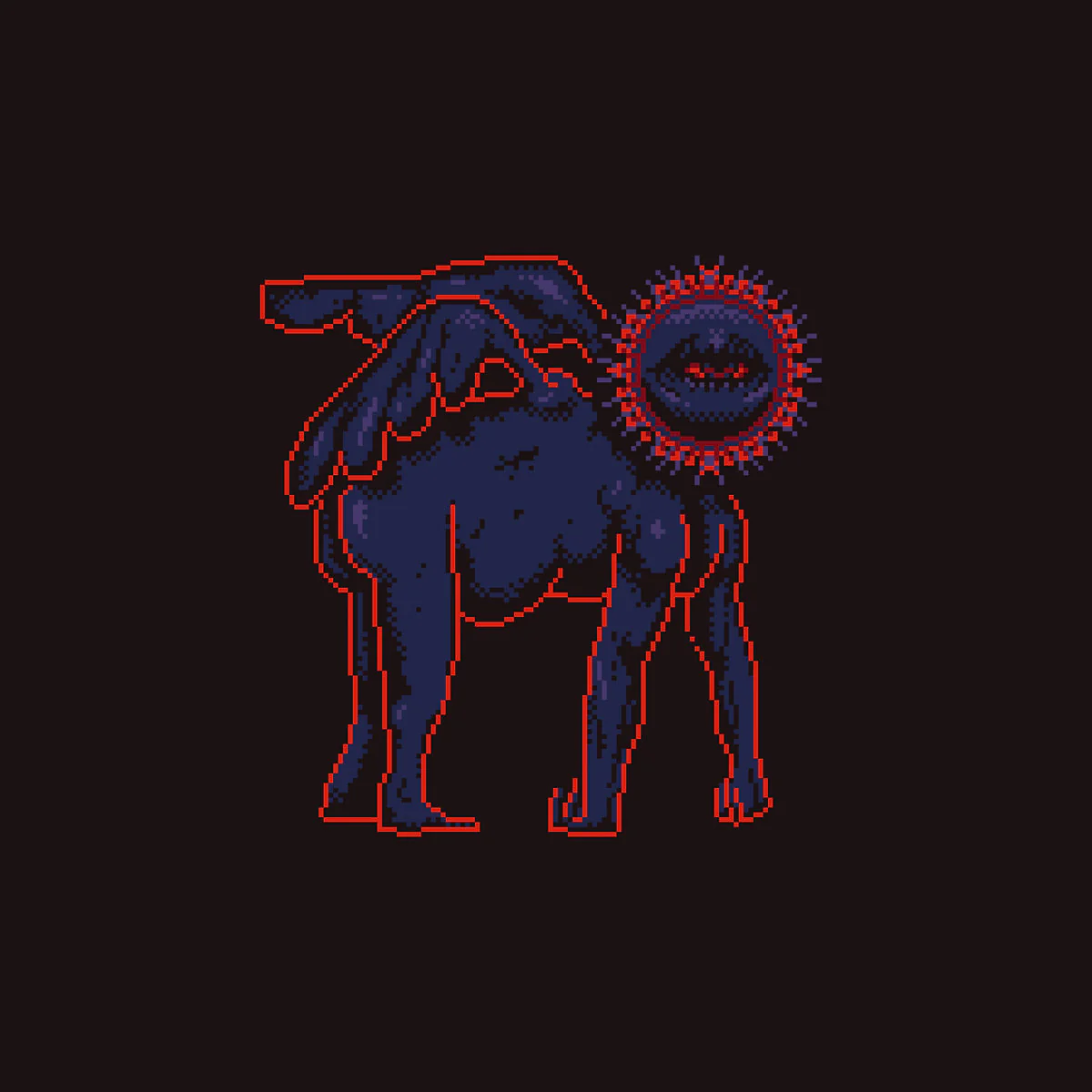
Sanam - Sametou Sawtan (LP)
The title of the second SANAM album is as alive with possibility as the Lebanese band’s music. Sametou Sawtan translates from the Arabic to ‘I Heard A Voice’. Spooky or spiritual, however one reads the phrase, it speaks to the ability of sound and language to cause pause, steal attention, and open us to the moment. Likewise, the music of SANAM blurs tender frenzies and fire-scorched ballads, collapsing free-flowing rock and jazz frameworks into deeply rooted Arabic tradition. To hear them in full flight is to be held in the present and reorientated towards an open horizon.
Work on Sametou Sawtan began in early 2024. Initial ideas formed at Tunefork Studios in Beirut were fleshed out in April during a residency at Beit Faris, a medieval house in the coastal city of Byblos. The sextet: Sandy Chamoun (vocals), Antonio Hajj (bass), Farah Kaddour (buzuq), Anthony Sahyoun (guitar, synth), Pascal Semerdjian (drums), and Marwan Tohme (guitars), were joined by producer Radwan Ghazi Moumneh (Jerusalem In My Heart). The album’s last two tracks are recordings from the Beit Faris sessions, while the rest were captured at La Frette Studios in Paris during the band’s summer 2024 European tour.
The record processes feelings of distance and dislocation. “For the last five years it feels like everyone is leaving Lebanon,” explains Chamoun. “The album isn’t literally about that, but the idea that something is leaving you….A distance from events even though you’re living them, a distance from your house even though you’re inside it.”
Whether in the yearning ballad “Goblin” or the slow-burning, autotune-doused freakout of “Habibon”, Sametou Sawtan captures the striving for stable ground in a world seldom capable of offering it. It rides the mesmerizing intensity of the SANAM live experience while affording their music nuance, depth, and tremendous dynamic range. Like their debut, lyrics for many tracks are borrowed, words placed into new contexts to process the present. “Hamam” reinterprets an Egyptian folk song. In “Hadikat Al Ams”, the cracked hard-rock stomp propels text by contemporary Lebanese writer Paul Shaoul. And both “Sayl Damei” and the title track use poems by twelfth century Iranian poet and groundbreaking mathematician Omar Khayyam. “When you read something from Omar, you feel a connection to now,” Chamoun says. “The feeling that there’s not a clear path.”
Sametou Sawtan also features two songs with Chamoun’s own lyrics, including opener “Harik”. It was the seed of the album, written by Chamoun in February 2024, with the band building the track around her words. It begins with a shudder, razored electronics, and gasping voice perforating pounding drums before the band locks into triumphant ascent. It is about immersion in “an infinite fire,” Chamoun reveals. She wrote the lyrics to “Tatayoum” alone before bringing them to the band. It reflects a different kind of intensity, “a loop, an obsession,” she suggests. Buzuq weaves through hovering electronics and urgent drums while Chamoun recites Arabic words describing love. The incessant energies explored in these tracks aren’t necessarily negative. She compares their intensity to a writer locked in a train of thought, for better or worse.
“It’s not about being depressed or sad,” says Chamoun. “It’s a trap, but it can also be magical.”
Product Information
Product Information
Shipping & Returns
Shipping & Returns
Description
The title of the second SANAM album is as alive with possibility as the Lebanese band’s music. Sametou Sawtan translates from the Arabic to ‘I Heard A Voice’. Spooky or spiritual, however one reads the phrase, it speaks to the ability of sound and language to cause pause, steal attention, and open us to the moment. Likewise, the music of SANAM blurs tender frenzies and fire-scorched ballads, collapsing free-flowing rock and jazz frameworks into deeply rooted Arabic tradition. To hear them in full flight is to be held in the present and reorientated towards an open horizon.
Work on Sametou Sawtan began in early 2024. Initial ideas formed at Tunefork Studios in Beirut were fleshed out in April during a residency at Beit Faris, a medieval house in the coastal city of Byblos. The sextet: Sandy Chamoun (vocals), Antonio Hajj (bass), Farah Kaddour (buzuq), Anthony Sahyoun (guitar, synth), Pascal Semerdjian (drums), and Marwan Tohme (guitars), were joined by producer Radwan Ghazi Moumneh (Jerusalem In My Heart). The album’s last two tracks are recordings from the Beit Faris sessions, while the rest were captured at La Frette Studios in Paris during the band’s summer 2024 European tour.
The record processes feelings of distance and dislocation. “For the last five years it feels like everyone is leaving Lebanon,” explains Chamoun. “The album isn’t literally about that, but the idea that something is leaving you….A distance from events even though you’re living them, a distance from your house even though you’re inside it.”
Whether in the yearning ballad “Goblin” or the slow-burning, autotune-doused freakout of “Habibon”, Sametou Sawtan captures the striving for stable ground in a world seldom capable of offering it. It rides the mesmerizing intensity of the SANAM live experience while affording their music nuance, depth, and tremendous dynamic range. Like their debut, lyrics for many tracks are borrowed, words placed into new contexts to process the present. “Hamam” reinterprets an Egyptian folk song. In “Hadikat Al Ams”, the cracked hard-rock stomp propels text by contemporary Lebanese writer Paul Shaoul. And both “Sayl Damei” and the title track use poems by twelfth century Iranian poet and groundbreaking mathematician Omar Khayyam. “When you read something from Omar, you feel a connection to now,” Chamoun says. “The feeling that there’s not a clear path.”
Sametou Sawtan also features two songs with Chamoun’s own lyrics, including opener “Harik”. It was the seed of the album, written by Chamoun in February 2024, with the band building the track around her words. It begins with a shudder, razored electronics, and gasping voice perforating pounding drums before the band locks into triumphant ascent. It is about immersion in “an infinite fire,” Chamoun reveals. She wrote the lyrics to “Tatayoum” alone before bringing them to the band. It reflects a different kind of intensity, “a loop, an obsession,” she suggests. Buzuq weaves through hovering electronics and urgent drums while Chamoun recites Arabic words describing love. The incessant energies explored in these tracks aren’t necessarily negative. She compares their intensity to a writer locked in a train of thought, for better or worse.
“It’s not about being depressed or sad,” says Chamoun. “It’s a trap, but it can also be magical.”