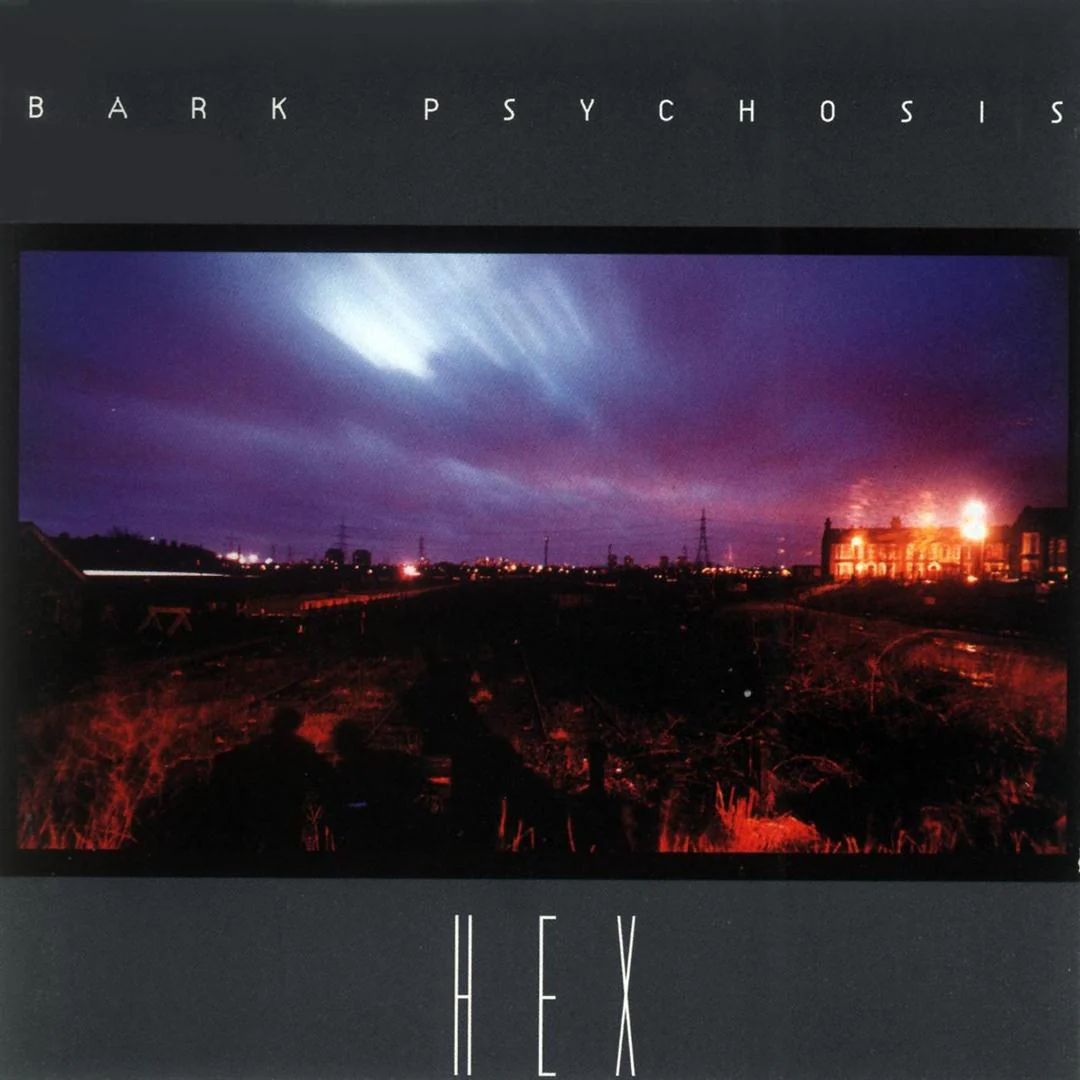
Bark Psychosis - Hex (LP)
The recent release of Jeanette Leech’s book ‘Fearless: The Making Of Post-Rock’ (Jawbone Press) celebrates post-rock and its origins. Finding new inspiration, bands were beginning to experiment with techniques as the digital age took over.
A case study in her new book, Bark Psychosis were one of the most innovative bands of their time and as legend has it, saw the first use of the term ‘post-rock’ by music critic Simon Reynolds.
Following several singles and EPs, the avant-garde soundscapes built around drones and samples of 21-minute stand-out track ‘Scum’ arrived just two years before their seminal debut ‘Hex’ (1994). Frustrated by the mainstream, ‘Scum’ was a huge statement that set them apart from the beginning.
Bark Psychosis’ sound was born out of their improvisations at makeshift studio within St John’s Church in Stratford. Taking a year to complete ‘Hex’ left the band on the brink of collapse and by the time of its release they had dissolved.
Hailed as a masterpiece, it’s “mysterious, haunting, and breathtakingly visionary” (Allmusic). Breaking down their songs and rebuilding them in the studio brought distinguishing ambient soundscapes and an atmospheric experimental sound. Last year Fact Magazine deservedly gave the album further recognition with it claiming top spot in their ’30 Best Post-Rock Albums Of All Time’.
Following ‘Hex’ and the disintegration of the band, Graham Sutton went on to create seminal Drum ‘n’ Bass as Boymerang and hugely acclaimed production work for the likes of These New Puritans, British Sea Power, Silver Apples, Jarvis Cocker and East India Youth. He revived Bark Psychosis at the turn of the millennium, eventually releasing another album, the equally extraordinary ‘///Codename: Dustsucker’
Original: $68.08
-65%$68.08
$23.83Bark Psychosis - Hex (LP)
The recent release of Jeanette Leech’s book ‘Fearless: The Making Of Post-Rock’ (Jawbone Press) celebrates post-rock and its origins. Finding new inspiration, bands were beginning to experiment with techniques as the digital age took over.
A case study in her new book, Bark Psychosis were one of the most innovative bands of their time and as legend has it, saw the first use of the term ‘post-rock’ by music critic Simon Reynolds.
Following several singles and EPs, the avant-garde soundscapes built around drones and samples of 21-minute stand-out track ‘Scum’ arrived just two years before their seminal debut ‘Hex’ (1994). Frustrated by the mainstream, ‘Scum’ was a huge statement that set them apart from the beginning.
Bark Psychosis’ sound was born out of their improvisations at makeshift studio within St John’s Church in Stratford. Taking a year to complete ‘Hex’ left the band on the brink of collapse and by the time of its release they had dissolved.
Hailed as a masterpiece, it’s “mysterious, haunting, and breathtakingly visionary” (Allmusic). Breaking down their songs and rebuilding them in the studio brought distinguishing ambient soundscapes and an atmospheric experimental sound. Last year Fact Magazine deservedly gave the album further recognition with it claiming top spot in their ’30 Best Post-Rock Albums Of All Time’.
Following ‘Hex’ and the disintegration of the band, Graham Sutton went on to create seminal Drum ‘n’ Bass as Boymerang and hugely acclaimed production work for the likes of These New Puritans, British Sea Power, Silver Apples, Jarvis Cocker and East India Youth. He revived Bark Psychosis at the turn of the millennium, eventually releasing another album, the equally extraordinary ‘///Codename: Dustsucker’
Product Information
Product Information
Shipping & Returns
Shipping & Returns
Description
The recent release of Jeanette Leech’s book ‘Fearless: The Making Of Post-Rock’ (Jawbone Press) celebrates post-rock and its origins. Finding new inspiration, bands were beginning to experiment with techniques as the digital age took over.
A case study in her new book, Bark Psychosis were one of the most innovative bands of their time and as legend has it, saw the first use of the term ‘post-rock’ by music critic Simon Reynolds.
Following several singles and EPs, the avant-garde soundscapes built around drones and samples of 21-minute stand-out track ‘Scum’ arrived just two years before their seminal debut ‘Hex’ (1994). Frustrated by the mainstream, ‘Scum’ was a huge statement that set them apart from the beginning.
Bark Psychosis’ sound was born out of their improvisations at makeshift studio within St John’s Church in Stratford. Taking a year to complete ‘Hex’ left the band on the brink of collapse and by the time of its release they had dissolved.
Hailed as a masterpiece, it’s “mysterious, haunting, and breathtakingly visionary” (Allmusic). Breaking down their songs and rebuilding them in the studio brought distinguishing ambient soundscapes and an atmospheric experimental sound. Last year Fact Magazine deservedly gave the album further recognition with it claiming top spot in their ’30 Best Post-Rock Albums Of All Time’.
Following ‘Hex’ and the disintegration of the band, Graham Sutton went on to create seminal Drum ‘n’ Bass as Boymerang and hugely acclaimed production work for the likes of These New Puritans, British Sea Power, Silver Apples, Jarvis Cocker and East India Youth. He revived Bark Psychosis at the turn of the millennium, eventually releasing another album, the equally extraordinary ‘///Codename: Dustsucker’